Guide
What Does a Boxing Promoter Do?
Fans see the fighters, the referee and the lights. Behind every card is a promoter who picked the date, booked the building, signed the fighters and found the money to pay them. Here is what that job really involves, and how Boxing Tycoon hands it to you.
The short answer
A boxing promoter is the person or company that puts on fight nights and builds fighters into attractions. They sign boxers to promotional contracts, decide who fights whom, rent the venue, sell the tickets, negotiate with broadcasters and pay everyone involved, from the headliners to the ring announcer. If the event makes money, the promoter keeps what is left after the bills are settled. If it loses money, the promoter eats the loss, and nobody else is going to cover it.
That last point explains most of how promoters behave. They are risk takers first and fight fans second, even the ones who love the sport deeply. Every decision, from the opponent a prospect faces to the size of the arena, is a bet on what the public will pay to see. The best promoters make a lot of small, sensible bets and only a few big ones, and they know which is which.
Matchmaking is the heart of the job
Matchmaking means deciding who fights whom, and when. Good matchmaking keeps a young fighter improving without exposing him too early, gives a contender a fight that proves something, and gives fans a main event they will happily pay to see. Bad matchmaking ruins careers in a single night, either by feeding a prospect to someone far too good or by boring the audience with one-sided fights nobody wanted.
Bigger promotions employ dedicated matchmakers, but the promoter signs off on every pairing. He has to balance three interests that rarely line up perfectly: protecting the fighters he has invested in, selling the event to fans and broadcasters, and staying on good terms with the sanctioning bodies that control rankings and title opportunities. A typical matchmaking week involves juggling all of these at once.
- Developing prospects with steadily harder opponents
- Building rivalries that sell tickets
- Lining up mandatory challengers and title shots
- Filling the undercard with competitive, watchable fights
Venues, dates and the gate
The gate is the money from ticket sales. A promoter picks a date that avoids clashing with other big events, then books a venue that fits the expected crowd. Too small and you leave money on the table and turn fans away. Too big and a half-empty arena looks bad on television, kills the atmosphere and costs you rent you cannot cover. Getting that call right is a skill learned over many shows.
Ticket pricing is a balancing act of its own. Ringside seats can carry a premium, but the cheap seats create the noise and energy that make a show feel big. A local fighter with a loyal following can be worth more at the gate than a better boxer nobody has heard of, which is why promoters love hometown heroes and build cards around them whenever they can.
TV deals and broadcast money
For most televised cards, broadcast money is bigger than the gate. Broadcasters pay a rights fee to show the event, and that fee depends on how strong the card is and how many people are expected to tune in. Strong main events earn better time slots and bigger channels, while the very biggest fights go to pay-per-view, where fans buy the event individually and the revenue can dwarf everything else.
This is why promoters care so much about building names. A fighter who draws viewers lifts the value of every card he headlines, and the money he generates funds the rest of the stable. A promoter with one genuine attraction can afford to develop five prospects behind him. Without that attraction, the whole operation has to scrape by show to show.
Purses, contracts and risk
The purse is what a fighter is paid for a bout. Promoters usually guarantee purses before they know how many tickets will sell or how a broadcaster will value the show. Add venue rent, officials, travel, hotels, medical staff and marketing, and a single fight night can commit a promoter to a large sum well before the first bell. A late withdrawal or a weak main event can turn a profitable plan into a loss overnight.
Promotional contracts usually cover a set number of fights or years. They give the promoter time to recover his investment in a fighter, and give the fighter a guaranteed schedule. Licensing rules for promoters vary by country and commission, but most places require a license, some proof of financial standing and strict adherence to local medical and safety regulations.
Doing it in Boxing Tycoon
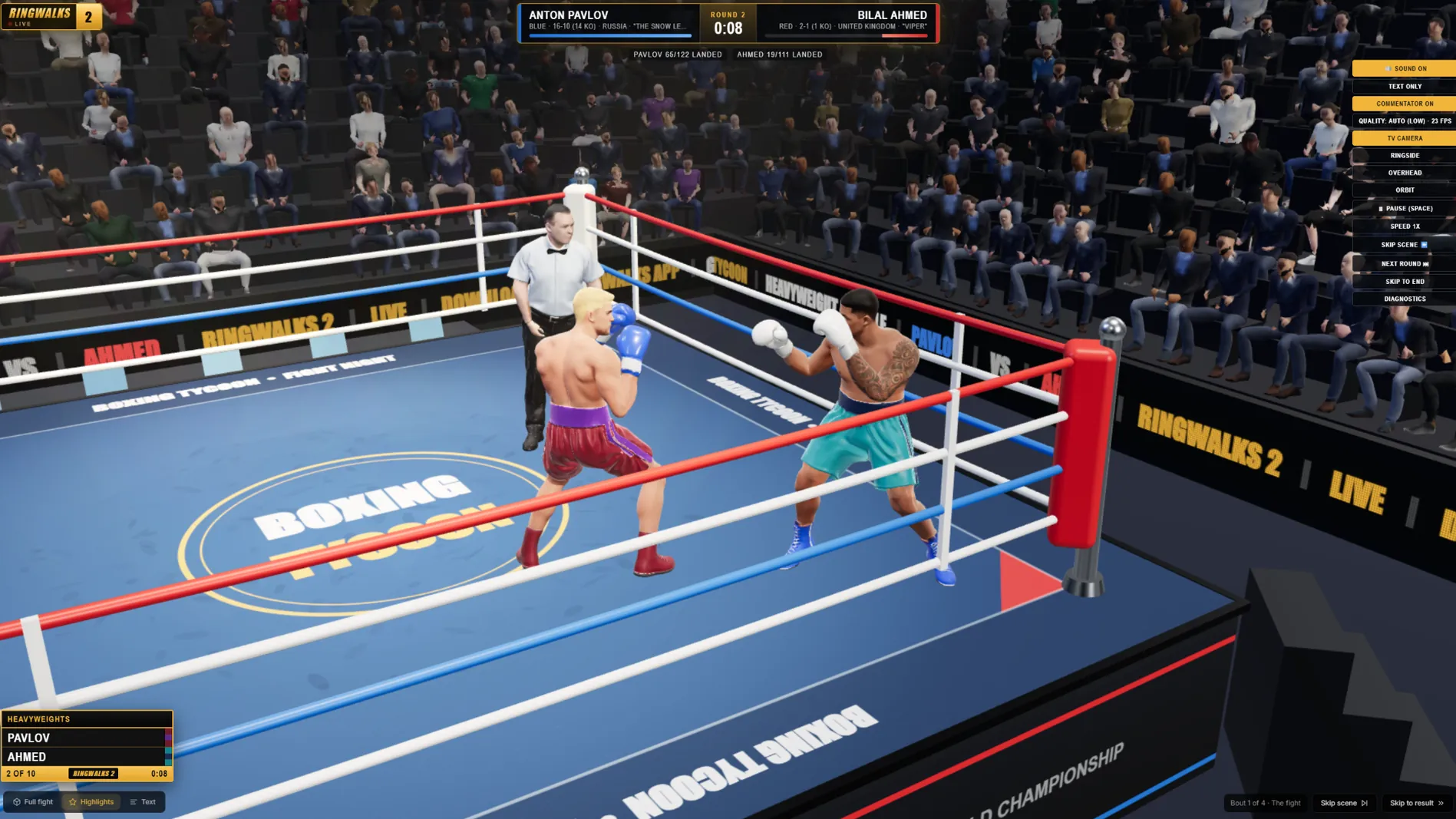
Boxing Tycoon puts you in that seat. You start with $1,000,000, an empty roster and a name nobody has heard of. You sign the fighters, build the cards, sell the tickets and make the deals with TV, sponsors and pay-per-view.
Every signing happens across the desk, in a real back-and-forth with the fighter's manager. Push too hard and he walks out, and he remembers it. Meanwhile rival promoters build their own empires. On fight night it all goes out on Ringwalks TV, the game's own broadcast, and the fight plays out in full 3D.