Guide
How a Big Fight Gets Made
Fans call for a fight, the fighters say they want it, and then months go by with nothing signed. Big fights are business deals with a lot of moving parts. This guide explains how they come together, why they fall apart, and what the paperwork behind a superfight usually covers.
It starts with demand
No big fight gets made because two people simply agree to it. It gets made because enough people will pay to see it. Promoters spend years building fighters until their records, styles and personalities create a matchup the public is asking for. When the noise is loud enough, the fight becomes worth more than either fighter can earn against anyone else, and that is usually the moment real talks begin.
Timing matters as much as demand. A fight can be too early, when one side still needs more wins to justify the risk, or too late, when one fighter has slipped and the matchup has lost its shine. Many of the most famous fights that never happened were simply left on the table while both camps waited for a better moment that never came.
Who sits at the table
A big fight usually involves more parties than fans realize. Each fighter has a promoter, a manager and often an adviser or lawyer. If the fighters are with different promoters, the event becomes a co-promotion, with both companies sharing the work and the revenue. Broadcasters are part of the conversation from the start, because their money often decides whether the numbers work at all. If a title is on the line, the sanctioning body's rules and fees come into play too.
Every one of these people wants something slightly different. One side wants the bigger share, another wants home advantage, a third wants the fight on its platform on a particular date. Getting all of them to sign the same document is the real skill of the business.
- Promoters for each fighter, sometimes in a co-promotion
- Managers, advisers and lawyers
- Broadcasters and pay-per-view partners
- Sanctioning bodies when a title is involved
- Venues or host cities bidding for the event
How the money gets split
The first big question is the split. In most negotiations one fighter is the A-side, the bigger draw or the champion, and the other is the B-side. The A-side usually takes the larger share and gets more say on details like the date, the location and which corner he uses. The B-side accepts a smaller share in exchange for the opportunity and the platform.
Splits can be set as fixed guaranteed purses, as percentages of the total revenue, or as a mix of a guarantee plus a share of pay-per-view and other income above a certain level. A guarantee protects a fighter if sales disappoint, while a percentage rewards him if the event is a hit. Arguments over that structure, and over who really brings in the audience, are where many fights stall.
Purse bids when talks break down
When a sanctioning body orders a title fight, often between a champion and his mandatory challenger, the two camps get a set period to agree terms on their own. If they cannot, the body can call a purse bid. Promoters submit sealed offers for the right to stage the fight, and the highest bid usually wins the promotional rights. The purse is then divided between the fighters by a split the body's rules already set out.
A purse bid takes the decision out of the camps' hands. It can produce a big payday for a challenger who would never have been offered as much privately, and it can hand a champion's fight to a rival promoter. Because of that risk, the threat of a purse bid often pushes both sides into a private deal before the deadline.
Rematch clauses and step-aside deals
A rematch clause gives one side, usually the fighter taking the bigger risk, the right to an immediate return fight if he loses. The details vary: who can trigger it, how long after the first fight, and whether the purse split flips for the rematch. A champion facing a dangerous challenger may insist on one before signing.
A step-aside deal clears the road for a fight that would otherwise be blocked. If a mandatory challenger is owed a title shot, he can agree to wait while the champion takes a bigger fight first. In return he usually receives a step-aside fee and a guarantee that he gets his shot next. Everyone gets paid, and the bigger event goes ahead.
Broadcasters, venues and site fees
Broadcast rights are often the biggest single source of money in a major fight. The broadcaster wants a strong card, a good date and a main event that will attract viewers or pay-per-view buys. Its offer can decide the split, the date and even the undercard.
The venue is the other piece. For the very biggest fights, cities, resorts and arenas compete to host. They may pay a site fee to the promoter for the right to stage the event, because a superfight fills hotels and restaurants for days. A strong site fee can make a fight possible that the gate and broadcast money alone would not cover.
Making big fights in Boxing Tycoon
In Boxing Tycoon you are the promoter, and every deal is made face to face. Managers come to your office and negotiate for their fighters, and they remember how you treated them. If the fighter you want belongs to another promotion, you sit down with his promoter.
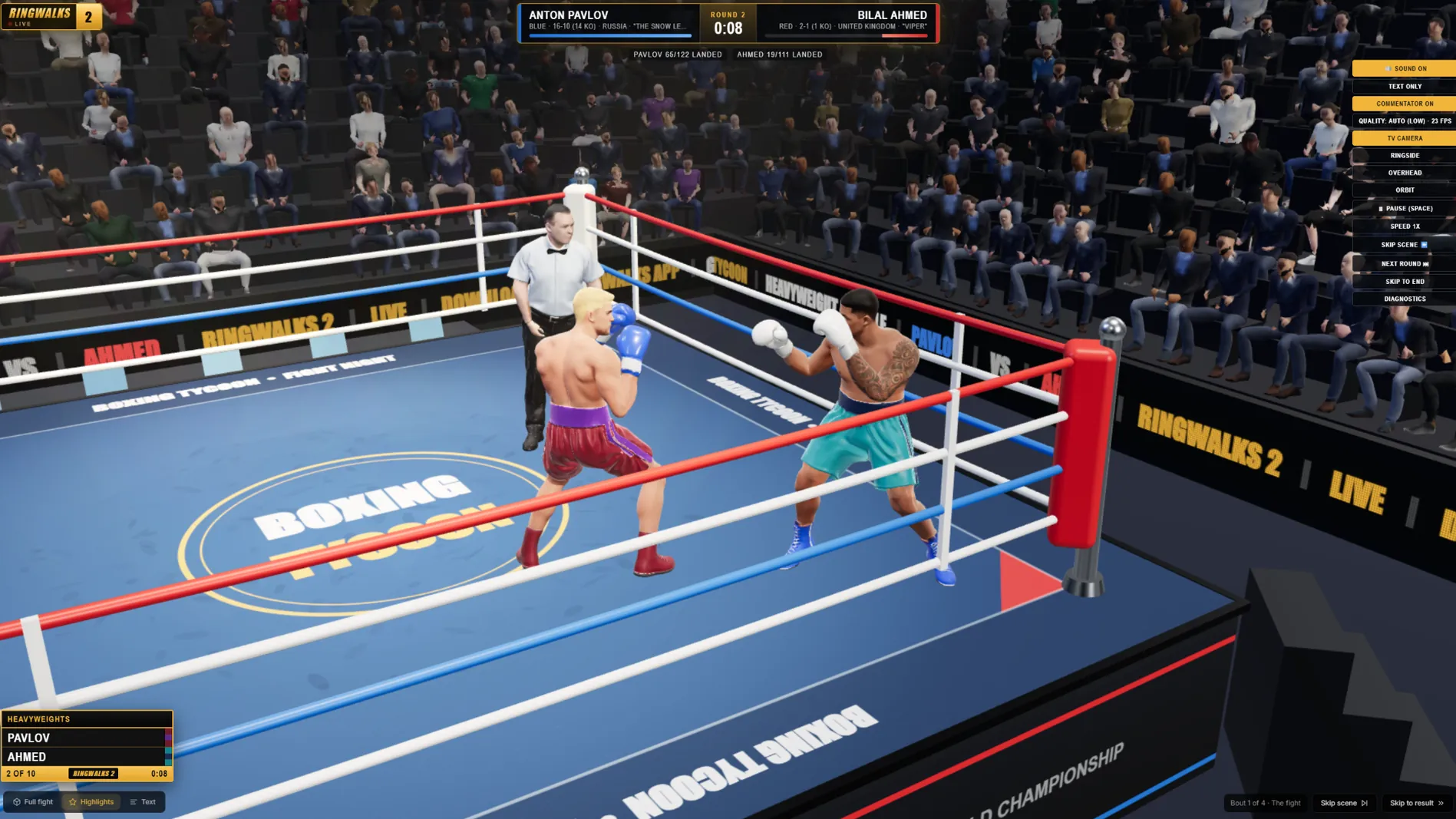
The world produces the matchups worth making. Twenty rival promoters sign boxers, run shows, and win and lose titles, while more than 3,000 boxers chase the same ten world titles, and close fights produce split decisions and controversy. You build the event from scratch: the venue, the date, the card, the ticket prices, the poster and the press announcement, with money from tickets, broadcast rights, streaming and pay-per-view. On the night it goes out on Ringwalks TV, with the arena's own intro video, long ring walks to the game's soundtrack and a fully voiced commentary team.