Guide
How to Get Better TV Deals in Boxing
Ticket sales pay some of the bills, but broadcast money is what turns a promotion into a real business. Broadcasters pay for audiences, and audiences follow good fights. Here is how TV money works in boxing, and how broadcast money fits into your business in Boxing Tycoon.
Why TV money matters so much
For most televised boxing events, the broadcast rights fee is larger than the gate. A small hall can only hold so many fans, but a broadcast can reach an audience many times that size. That is why promoters build their calendars around TV dates and why fighters with real drawing power are worth so much to the people who promote them.
Broadcast money also brings stability. A promoter with a reliable TV slot can plan a schedule months ahead, keep prospects active and make offers to fighters with confidence. Without it, every show is a gamble on ticket sales alone, and one quiet night at the box office can hurt badly.
What broadcasters are buying
Broadcasters are not really buying fights. They are buying viewers. A card that keeps people watching from the first bout to the main event is worth more than one big name surrounded by mismatches. They look closely at the names on the poster, the stakes involved, the styles in each matchup and the chance of a dramatic finish.
Consistency matters too. A promoter who delivers entertaining cards again and again earns trust, and trust earns better slots and better terms. One flat night can be forgiven. A run of them gets a promotion quietly moved down the schedule, and climbing back takes far longer than falling.
- A main event where either fighter can win
- Names that fans recognize or care about
- Stakes such as titles, rankings or rivalries
- A deep undercard that holds viewers all night
How card quality moves the needle
Upgrading a card does not always mean signing a superstar. Replacing a one-sided undercard bout with a competitive one, adding a ranked contender to the co-main event, or matching two unbeaten prospects with something to prove can all lift the value of a show without blowing up the budget.
The goal is a card where every fight has a reason to exist. Viewers stick around for that, and broadcasters notice when they do. Over time, a reputation for deep, competitive cards becomes one of the most valuable things a promotion owns.
From late-night slot to pay-per-view
Broadcast slots form a ladder. Smaller promotions start on late-night or secondary channels with modest fees and small audiences. Better cards earn earlier time slots and bigger channels. At the very top is pay-per-view, where fans pay for the event individually and the biggest fights in the sport generate their largest revenues.
Pay-per-view only works when demand is genuinely high. Putting a weak card on pay-per-view can damage a fighter's reputation and a promoter's credibility at the same time, and fans who feel short-changed are slow to pay again. Smart promoters save that step for the fights that truly feel like events, and build toward them over several cards so the audience arrives already invested.
Building stars who draw
Long-term TV money comes from building fighters audiences want to watch. That means activity, exciting styles, meaningful wins and a story fans can follow from fight to fight. A fighter who wins impressively on smaller broadcasts becomes the headliner who earns the promotion its next upgrade.
Rivalries help a great deal. A rematch after a close, disputed fight or a unification fight between two champions often draws more interest than either fighter could on his own. Promoters who can make those fights happen hold the strongest hand with broadcasters. Fighters who are personable in interviews and visible between fights also help, because a familiar face gives casual viewers a reason to tune in.
Broadcast money in Boxing Tycoon
In Boxing Tycoon the money comes in from ticket sales, TV and broadcast rights, streaming deals and pay-per-view, and it goes out on purses, signing bonuses, staff, gyms and camps. Every number has a breakdown, so you can see exactly what a show earned and where it went. Your reputation sets the ceiling: you climb from Unknown to Newcomer, Rising, Established, Elite and Legendary, and a bigger name opens better venues, bigger fights and boxers who would never have taken your call.
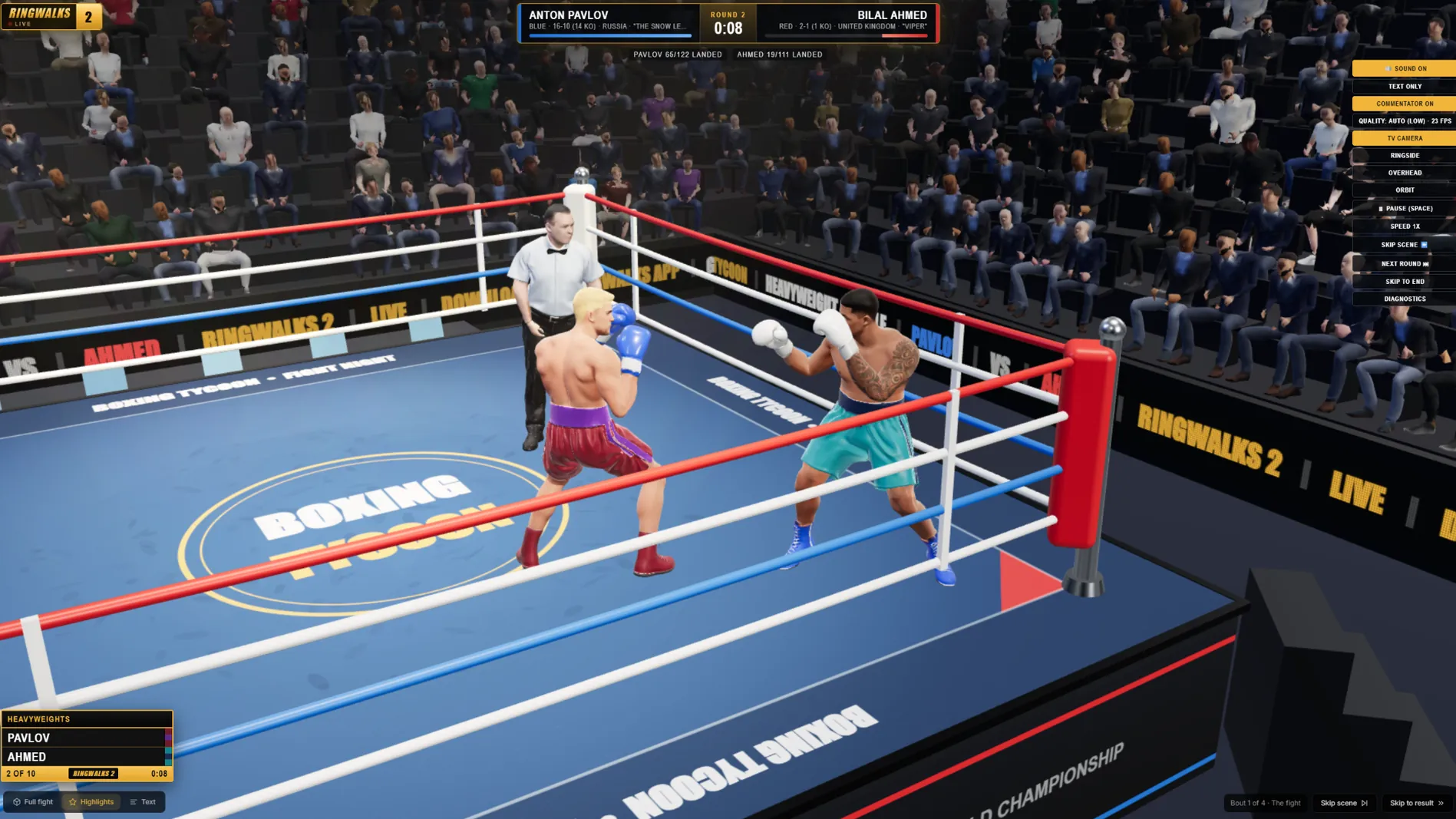
The same rules of attention apply. The press conference before every big fight builds hype and ticket sales with the answers you give, and sponsors are won and kept at the negotiating table. On the night, everything goes out on Ringwalks TV, the game's own broadcast.