Guide
How to Plan a Fight Night
A fight night is more than one big fight. It is a running order, a building, a ticket plan, a poster and a broadcast slot that all have to work together. Here is how promoters put an event together, and how you build one from scratch in Boxing Tycoon.
Start with the main event
Everything on a fight card is built around the main event. It decides the size of the venue, the price of the tickets and how much a broadcaster will pay for the night. A strong main event needs two things: fighters people want to see, and a result that is not a foregone conclusion. Fans can smell a mismatch, and they stay home.
A title fight helps, but a grudge match, a rematch or a clash of contrasting styles can sell just as well. Once the headliner is locked in, the rest of the card exists to support it, give the audience value for money and keep the night moving toward its biggest moment.
Building the rest of the card
The co-main event is the second biggest fight of the night and often features a contender or a rising name with a following of his own. Below that sits the undercard, where prospects get rounds and fans get action. The prelims open the show, usually while the building is still filling up and the bars are busy.
A well-built card has a rhythm. It mixes styles, places the most competitive fights later in the evening, and gives the crowd a reason to arrive early. It is also a chance for a promoter to showcase his own young fighters in front of a bigger audience than they could draw alone.
- Main event: the reason people buy tickets
- Co-main event: a strong second fight that adds value
- Undercard: prospects, local fighters and competitive bouts
- Prelims: early fights that build the atmosphere
Choosing the date and venue
Venue size should match demand. A packed small hall creates a great atmosphere, sounds incredible and looks good on camera. A huge arena that is half empty costs more in rent and feels flat to everyone watching at home. Most promoters move up in size gradually as a fighter's following grows, rather than gambling on a big room too soon.
The date matters as well. Clashing with another major sporting event can split the audience and hurt broadcast numbers. Holidays, local events and the fighters' training schedules all play a part, and a well-chosen date gives the promotional campaign enough runway to build real interest. Announcing too late leaves no time to sell the fight, while announcing too early risks a long wait in which an injury or a pull-out can wreck the plan.
Pricing tickets
Ticket pricing is a trade-off between income and attendance. Price too high and seats stay empty, which hurts the atmosphere and the look of the broadcast. Price too low and you sell out quickly but leave money behind. Most promoters use tiers, with premium ringside seats, mid-range sections and affordable seats higher up for the fans who bring the noise.
Watching sales over the weeks before the fight tells you a lot. Slow early sales can be a warning that the card needs a stronger draw or more promotion, while a quick sellout suggests you could have booked a bigger room or charged a little more.
Poster and TV
The poster is the face of the event. It tells fans who is fighting, when and where, and it sets the tone, whether that is a title showdown, a hometown homecoming or a bitter local rivalry. Good promotion builds anticipation in the weeks before fight night and turns casual fans into ticket buyers and viewers.
The broadcast deal is usually the biggest single income line for a card. Broadcasters pay for shows that will draw and hold viewers, so a deeper card with a meaningful main event earns a better slot and a better fee. A weak undercard can drag down the value of even a strong headliner.
Planning fight nights in Boxing Tycoon
In Boxing Tycoon you build every fight night yourself: the date, the venue, the card from main event to undercard, and the hype in fight week. Every show is a step towards the next title fight, and a bigger reputation opens bigger venues and bigger fights.
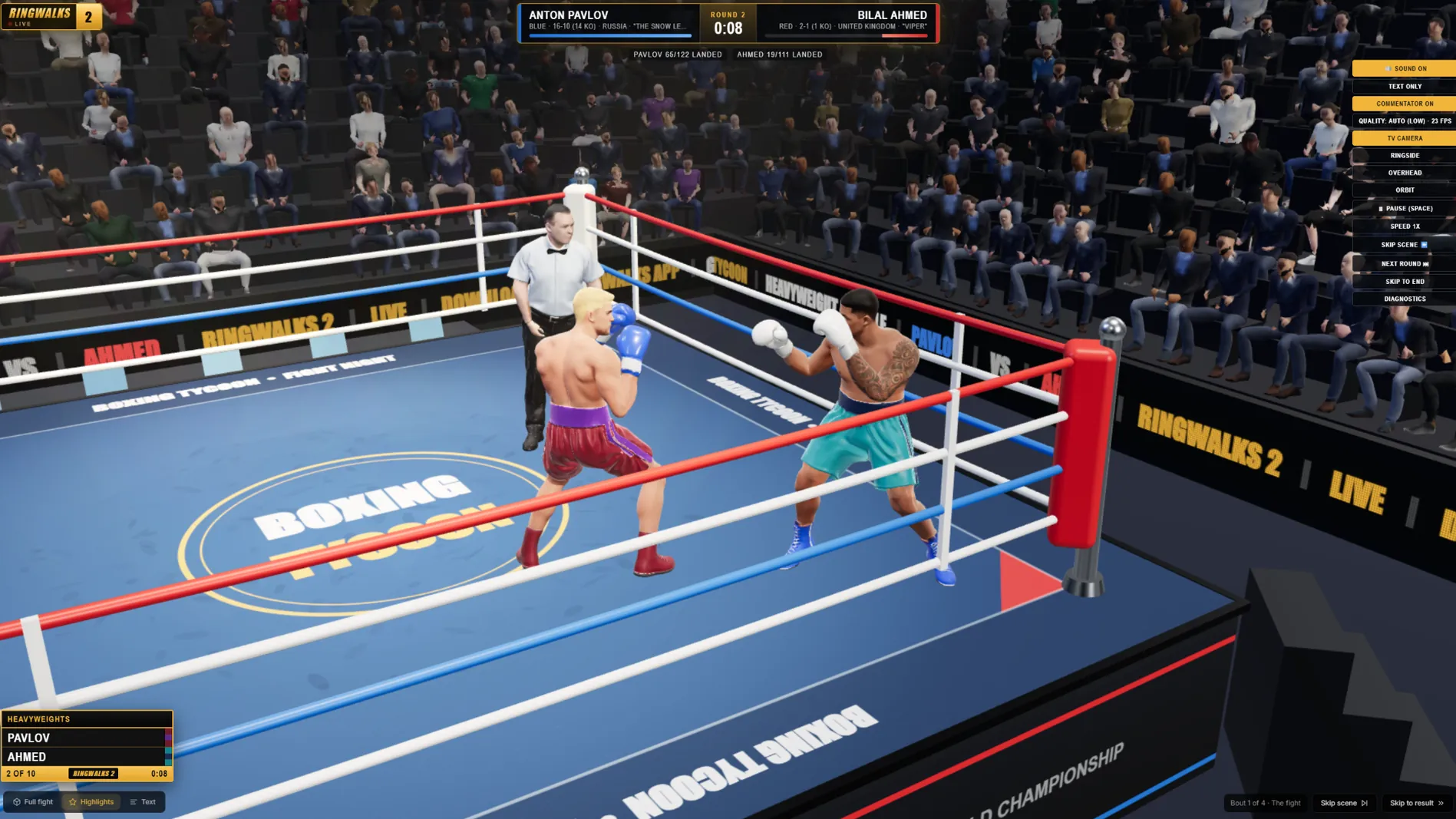
Then comes fight week, and on Saturday every venue opens the night with its own intro video. Everything goes out on Ringwalks TV, the game's own fight broadcast: the ring announcer, long ring walks to songs from the game's own soundtrack, the introductions and a fully voiced commentary team. After the bell come the verdict, the judges' scorecards, punch stats, purses paid out and the fallout in the press. Watch every fight on the card or skip to the result. You do not throw the punches, so a card you built carefully can still produce a surprise.